The Appearance of Jhulelal and His Promise
Jhulelal holds profound cultural significance for Sindhis worldwide, serving as a unifying deity and a symbol of their distinct cultural identity. He is revered as an avatar of Varuna, the Hindu god of water, and is considered the 'Ishta Deva' (chosen deity) and protector of the Sindhi Hindu community. His legend embodies the triumph of good over evil, faith over oppression, and religious freedom.
The story of Jhulelal's appearance and promise provides Sindhis with a sense of belonging and pride, especially after the partition of India when many were displaced from their homeland of Sindh. The annual festival of Cheti Chand, marking Jhulelal's birth, is a central celebration that brings the community together, emphasizing their unique traditions, customs, and resilience. Jhulelal's teachings promote peace, harmony, and interfaith understanding, as he is believed to have fostered mutual respect between Hindu Sindhis and Muslim people of Sindh. His iconography often depicts him seated on a lotus, resting on a Palla fish, symbolizing abundance and the sacred nature of water.
The Appearance of Jhulelal and His Promise
جهوليلال جو ظهور ۽ سندس وعدو
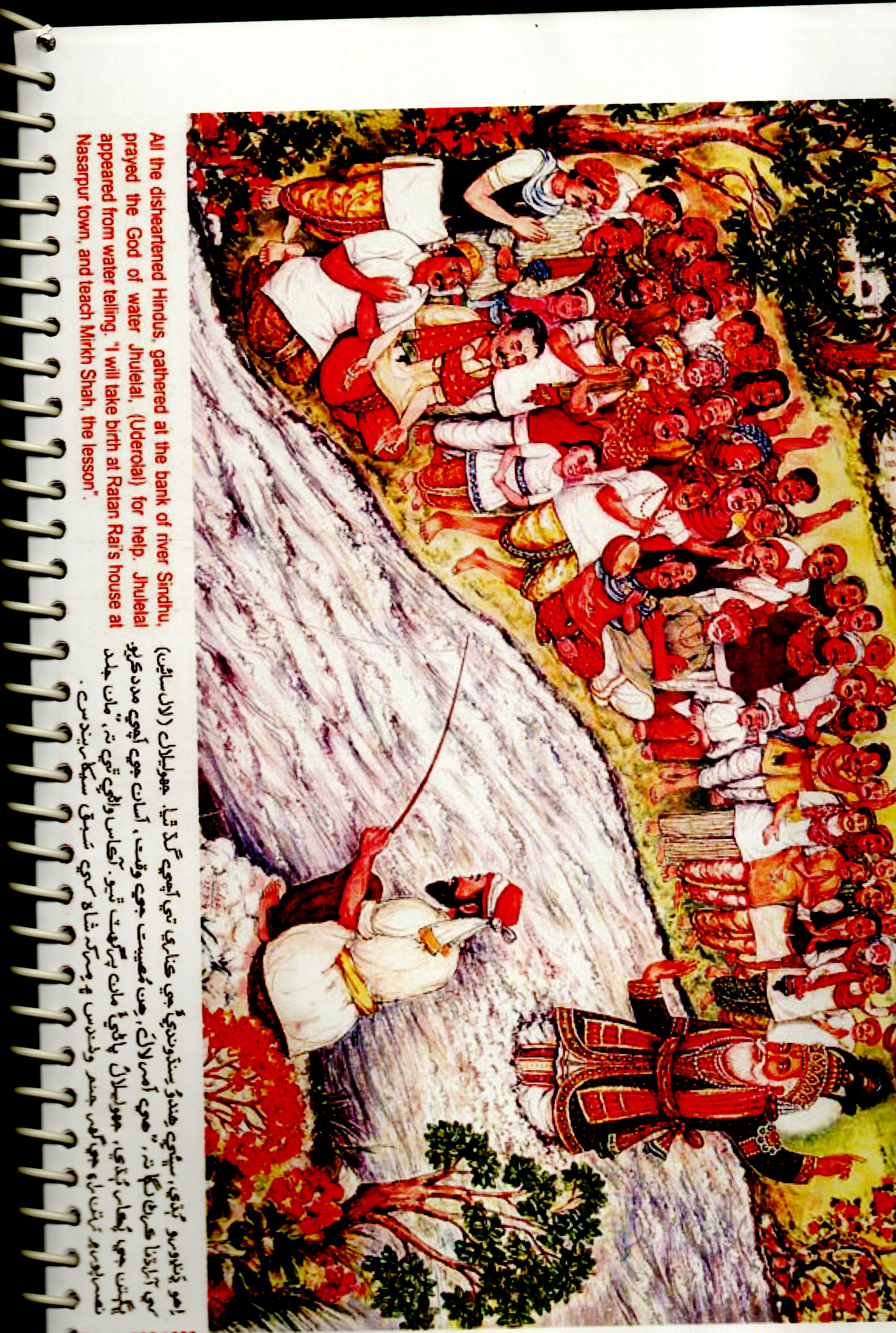
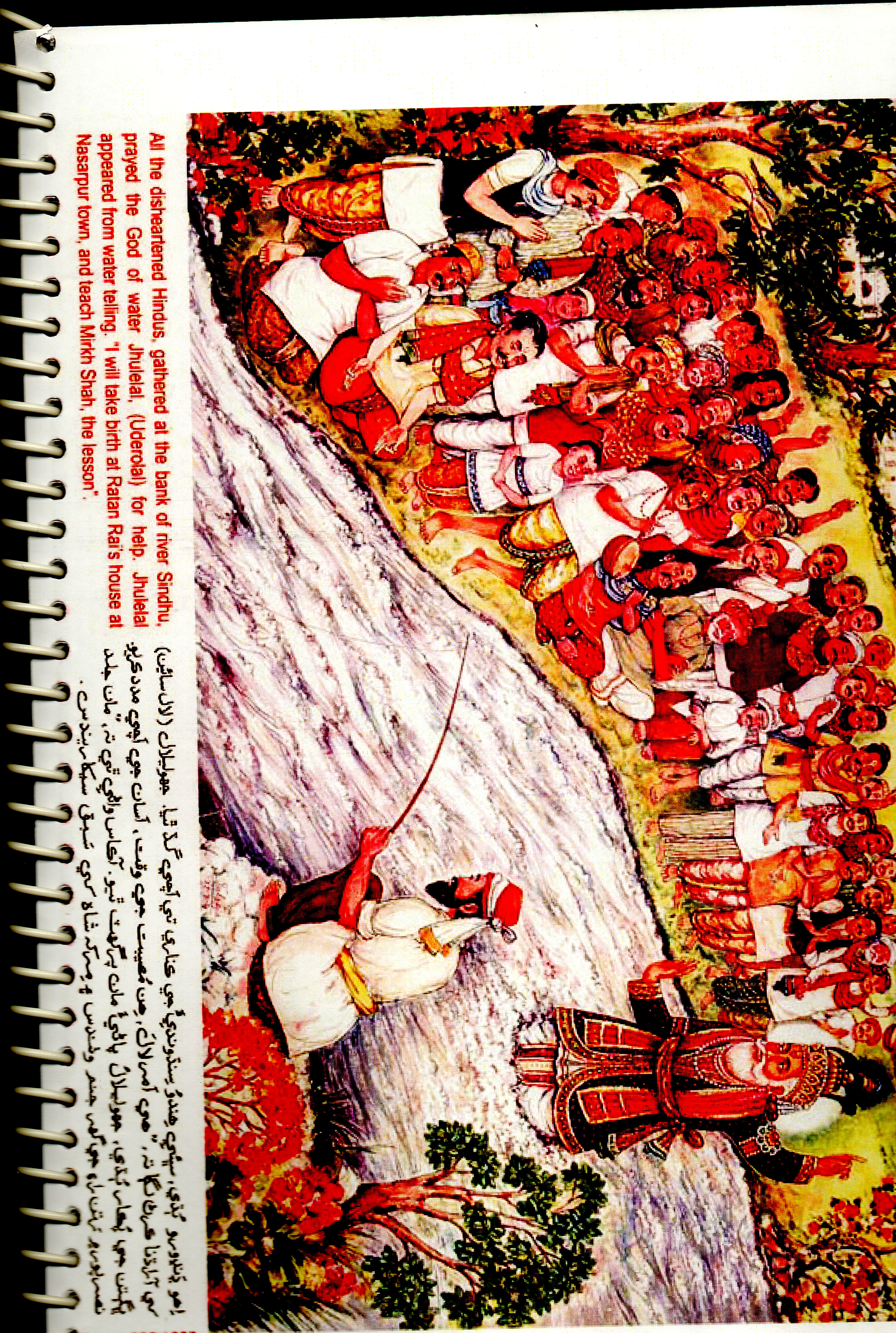
The legend of "The Appearance of Jhulelal and His Promise" recounts a pivotal moment for Sindhi Hindus facing severe oppression from the tyrannical ruler Mirkh Shah in Sindh. Disheartened and fearing forced conversion, the community gathered at the banks of the River Sindhu to pray to the water deity Varuna (also known as Dariya Lal) for divine intervention. Their fervent prayers for forty days, known as 'chaliho', were answered when Lord Jhulelal appeared from the water. He promised to take birth in the house of Ratan Rai (also referred to as Ratanchand Lohano) and Mata Devaki in Nasarpur town to confront Mirkh Shah, thus assuring his devotees of imminent divine protection and the preservation of their faith and culture.
Historical Overview
The historical background of the appearance of Jhulelal is set in 10th-century Sindh, during a period when the region was under Islamic rule. Specifically, the legend points to the tyrannical reign of Mirkh Shah of Thatta, who issued an ultimatum to local Hindus: convert to Islam or face death. Faced with this dire threat, the Sindhi Hindu community turned to the River Sindhu, the life-giver of their land, and prayed to Varuna, the god of water, for forty consecutive days, observing rituals and fasting.
In response to their unwavering faith, a divine voice was heard from the heavens, promising that a saviour would be born among them. Lord Varuna, the water deity, promised to take birth as a mortal child to avert the impending catastrophe. This divine incarnation, Uderolal, was born to Mata Devaki and Ratan Rai (Ratanchand Lohano) in Nasarpur town in 1007 Vikram Samvat (950 CE), on the day of Cheti Chand. The child was given names like Uderolal (meaning 'one who has sprung from water'), Amarlal (immortal child), and later became famously known as Jhulelal ('the swinging child') because his cradle would miraculously swing on its own. From childhood, Uderolal exhibited supernatural powers and preached messages of peace, tolerance, and the oneness of God, ultimately convincing Mirkh Shah to grant religious freedom to the Hindus and gaining devotees from both Hindu and Muslim communities.
Cultural Significance
Jhulelal holds profound cultural significance for Sindhis worldwide, serving as a unifying deity and a symbol of their distinct cultural identity. He is revered as an avatar of Varuna, the Hindu god of water, and is considered the 'Ishta Deva' (chosen deity) and protector of the Sindhi Hindu community. His legend embodies the triumph of good over evil, faith over oppression, and religious freedom.
The story of Jhulelal's appearance and promise provides Sindhis with a sense of belonging and pride, especially after the partition of India when many were displaced from their homeland of Sindh. The annual festival of Cheti Chand, marking Jhulelal's birth, is a central celebration that brings the community together, emphasizing their unique traditions, customs, and resilience. Jhulelal's teachings promote peace, harmony, and interfaith understanding, as he is believed to have fostered mutual respect between Hindu Sindhis and Muslim people of Sindh. His iconography often depicts him seated on a lotus, resting on a Palla fish, symbolizing abundance and the sacred nature of water.
"This heritage place preserves the spirit of cultural memory, where architecture, landscape, and history come together in one experience."
— Cultural Heritage Board DocumentationVisual Journey