Heritage Map of Sindh & Sindhi Alphabet
The Sindhi script and historical geography symbolize the unbroken continuum of Sindhi civilization across global borders. Representing unity in linguistic diversity and deep reverence for the sacred waters of Sindhu Darya, this heritage embodies the collective identity, wisdom, and literature of the Sindhi people.
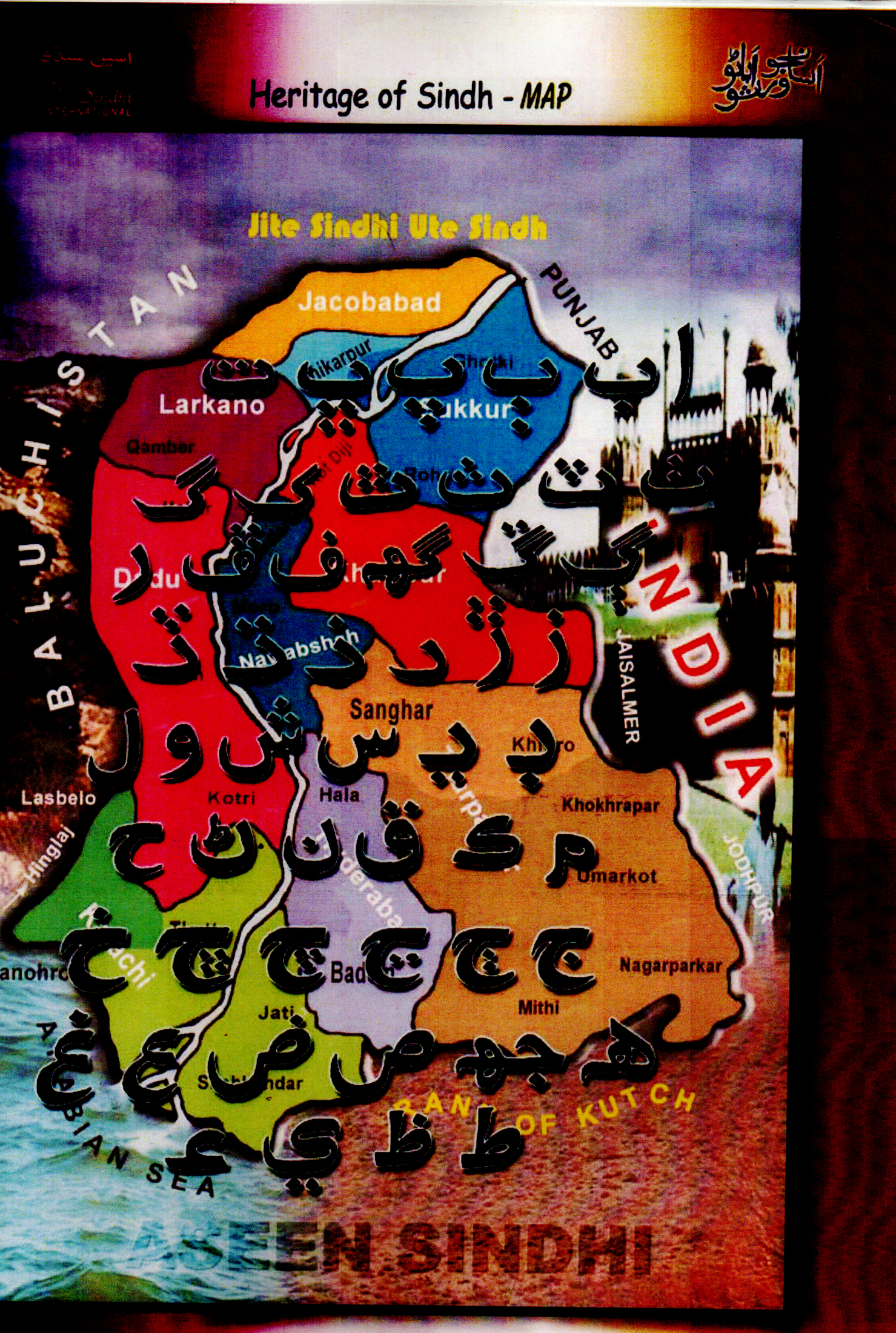
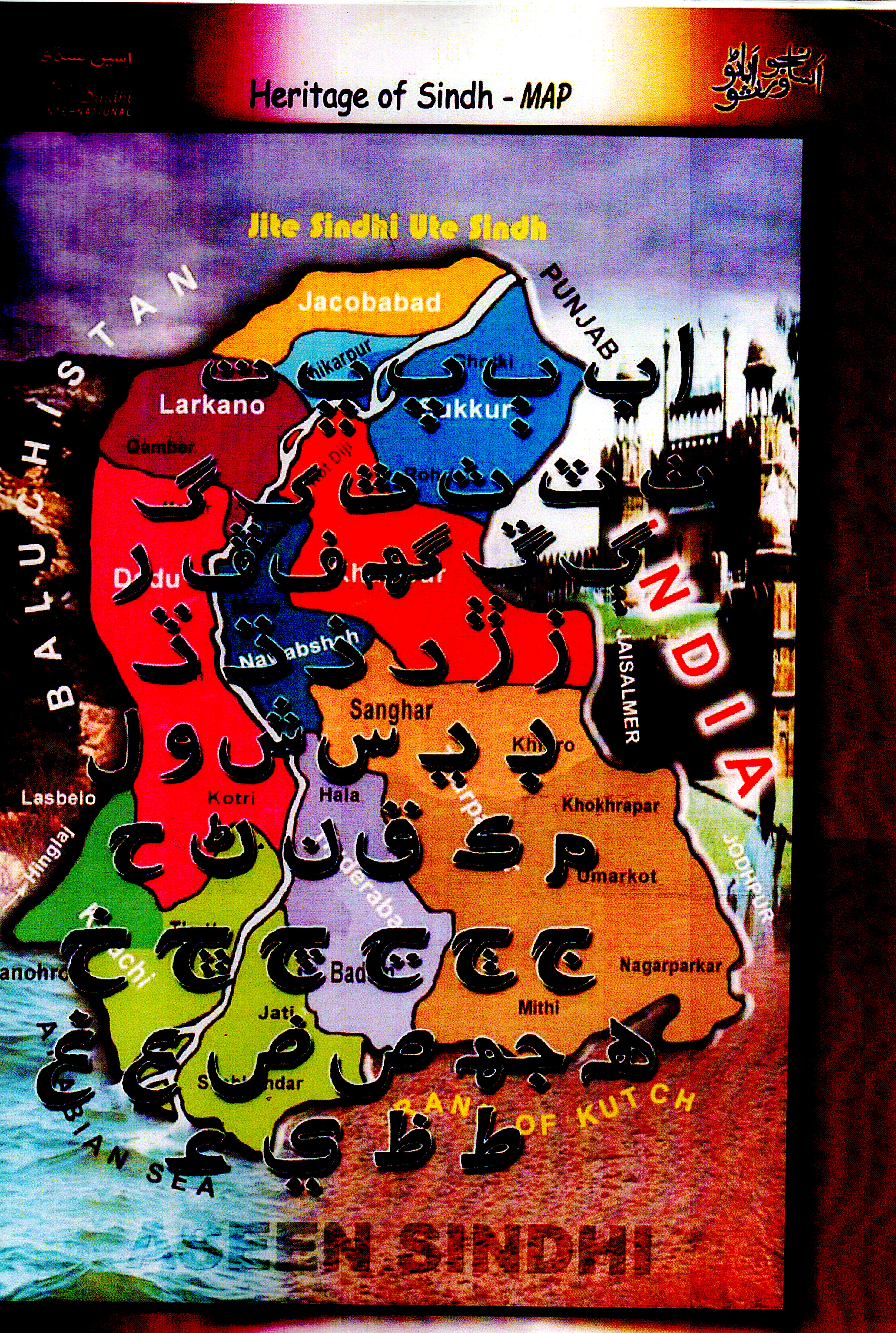
Heritage Map of Sindh & Sindhi Alphabet
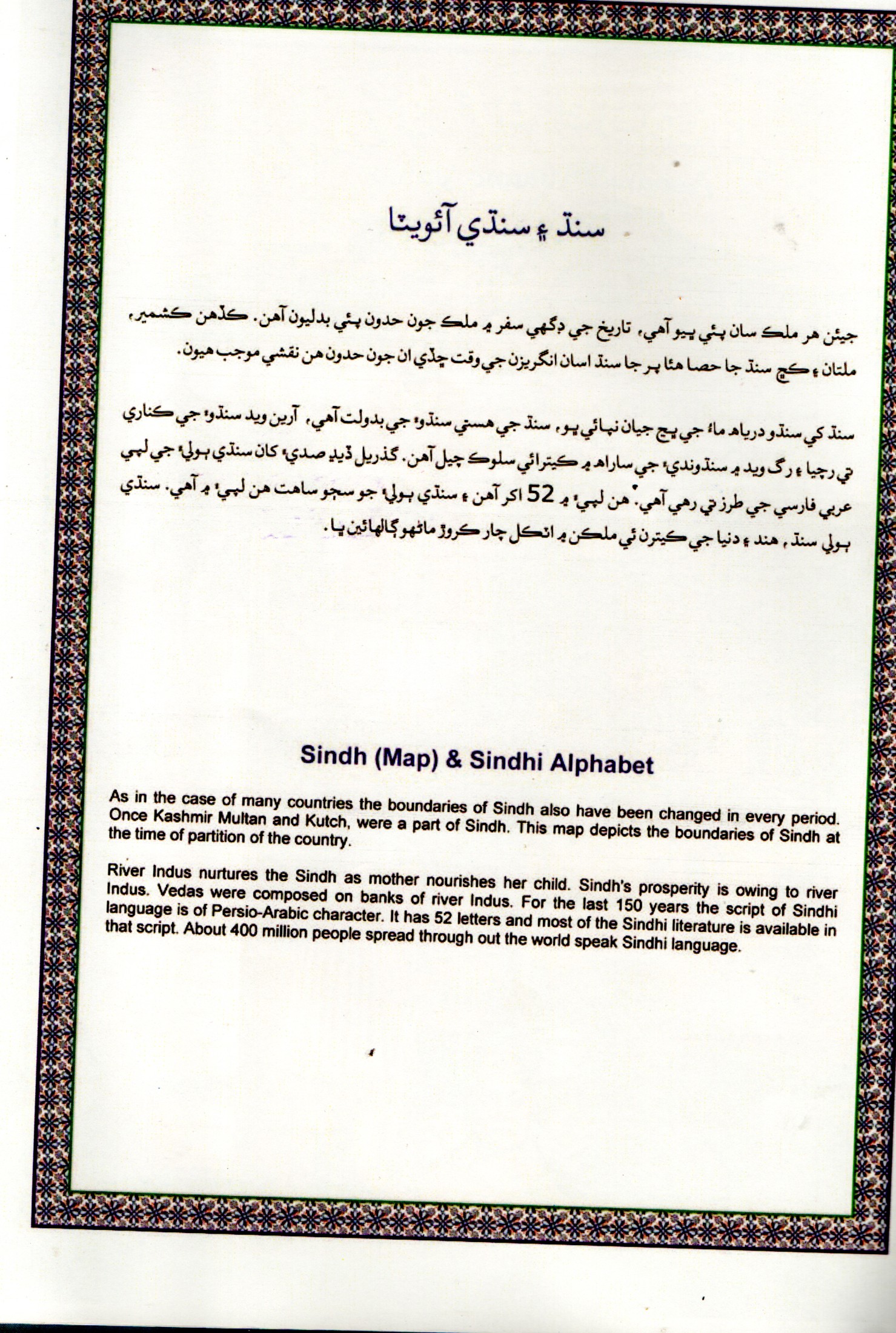
A cartographic and linguistic tribute celebrating the historic boundaries of Sindh nurtured by the Indus River (Sindhu Darya) alongside the 52-letter Perso-Arabic Sindhi script (Sindhi Aakhar) standardized in 1853.
Historical Overview
Throughout antiquity and medieval eras, the geographical boundaries of Sindh evolved continuously, having historically encompassed regions reaching Kashmir, Multan, and Kutch. The fertile plains of Sindh flourished around the sacred Indus River, on whose banks the ancient Vedic hymns were composed and the Indus Valley Civilization thrived. In 1853, under the British administration of Commissioner Sir Bartle Frere, a distinguished scholarly committee standardized the 52-letter Perso-Arabic alphabet (Sindhi-Arabic script) incorporating unique four-dot and aspirated sounds, preserving centuries of Sufi poetry, literature, and folklore for over 40 million Sindhis worldwide.
Cultural Significance
The Sindhi script and historical geography symbolize the unbroken continuum of Sindhi civilization across global borders. Representing unity in linguistic diversity and deep reverence for the sacred waters of Sindhu Darya, this heritage embodies the collective identity, wisdom, and literature of the Sindhi people.
"This heritage place preserves the spirit of cultural memory, where architecture, landscape, and history come together in one experience."
— Cultural Heritage Board DocumentationVisual Journey